
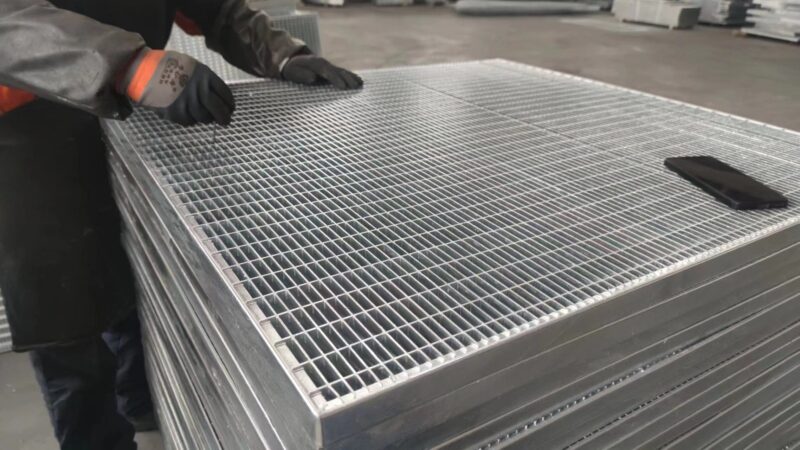
When buyers ask about press-locked steel grating, they usually need to turn a drawing, a site note or a purchase list into a clear steel grating specification. For buyers comparing a cleaner grating appearance with industrial performance, that means checking the product, drawing and order details before prices are compared.
The main decision is whether press-locked steel grating is needed for tighter openings, smoother appearance or special architectural areas. If you need the product range first, start from the Press-Locked Steel Grating page, then use the points below to make the inquiry clearer.
In RFQs and supplier emails, this topic can also appear as press-locked steel grating, press locked bar grating, pressure locked grating and press locked steel grating. Use the wording that matches the drawing, then add the site condition so the supplier understands the real use.
When press-locked steel grating is a good fit
This option is usually considered for projects where appearance, opening pattern and accurate fabrication matter. The exact choice depends on support span, traffic, corrosion exposure, drainage, walking surface and how the panels will be fixed on site.
- Walkways with closer openings
- Public access platforms
- Equipment screens
- Industrial floors
- Custom panels
Details to confirm before requesting a quote
A supplier can quote faster when the inquiry shows what the grating must do. If any item is missing, the supplier may assume a lighter panel, a different finish or a simpler fabrication scope.
| Item | What to send | Why it matters |
|---|---|---|
| Panel size | Width, length and quantity for each item | Prevents price changes caused by cutting and layout revisions |
| Bearing bar | Depth, thickness and direction on the drawing | Controls load capacity and how the panel sits on supports |
| Spacing | Bearing bar spacing and cross bar pitch | Affects open area, walking feel, drainage and weight |
| Surface | Plain or serrated top surface | Changes slip resistance in wet, oily or dusty areas |
| Finish | Black, painted, hot-dip galvanized or stainless steel | Controls corrosion resistance and final cost |
How buyers compare the options
Confirm the bearing bar, cross bar, opening size, surface finish and panel tolerance before comparing it with welded grating.
For export orders, also check packing, bundle weight, shipping marks and whether panel numbers match the drawing. This is especially useful when the site team needs to install many different panel sizes in a short time.
How the site condition changes the choice
Site conditions should be described in the inquiry. Indoor and outdoor use, wet areas, maintenance traffic, cleaning access and corrosion exposure can all change the recommended grating type.
When the supplier understands the working area, it is easier to recommend welded, press-locked, serrated, galvanized, stainless or custom fabricated panels.
Common mistakes to avoid
Do not choose press-locked grating only because it looks cleaner. The span and load still need to be checked.
- Wrong opening size
- Appearance not matched across batches
- Surface treatment chosen too late
- Support span not checked
- Missing edge banding
Before you send the inquiry
Prepare a simple list with panel size, quantity, material, surface finish, loading condition, drawings and destination. If drawings are not ready, send a sketch or site photo first. A clear first inquiry saves time for both the buyer and the factory.
- Is the quoted bar size and spacing the same as the drawing?
- Is the finish included after all cutting, welding and banding work?
- How will different panel sizes be marked and packed?
- Which clips, bolts or welding details are included in the offer?
Related steel grating pages
FAQ
What should I send for a press-locked steel grating quote?
Send drawings or sizes, bearing bar direction, load requirement, material, finish, quantity, destination and any installation notes.
How can I compare two supplier prices fairly?
Make sure both prices use the same bar size, spacing, material, finish, fabrication scope, packing and delivery terms.
When should I ask for drawing review?
Ask for drawing review before production if the order includes several panel sizes, cut-outs, stair treads, frames or special fixing details.
Send a steel grating inquiry if you want the factory to check sizes, finish, packing and export details before production.