
Buying Serrated Bar Grating for export projects
Serrated Bar Grating is used when a project needs open grating panels for access, drainage, ventilation or load bearing. Buyers normally compare it with plain and press-locked bar grating, then choose the finish: mill, hot-dip galvanized or stainless.
The safest way to quote is to confirm the drawing, span, load, bar spacing, surface, finish and quantity at the same time.
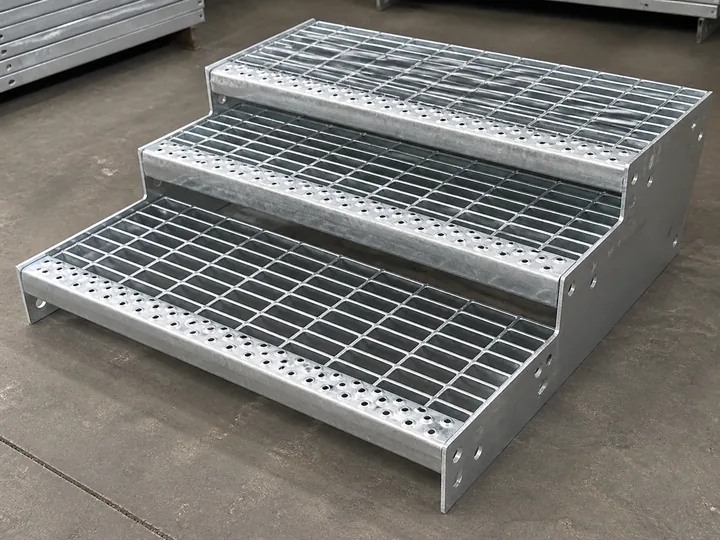
Galvanized Steel Grating Stair Treads
anti-slip serrated stainless bar grating
Anti-Slip Serrated Stainless Bar Grating panel
Anti-Slip Serrated Stainless Bar Grating panel
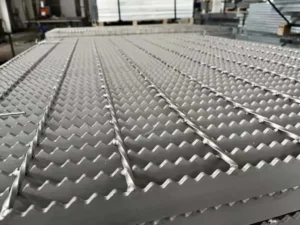
Anti-Slip Serrated Stainless Bar Grating panel
Good fit for Serrated Bar Grating
- Industrial platforms
- Walkways and catwalks
- Drainage covers
- Stair treads
- Custom fabricated panels
Options to compare
- Welded steel grating
- Press-locked steel grating
- Serrated steel grating
- Galvanized steel grating
- Stainless steel grating
Specification details to confirm
Steel grating quotations are easier to compare when the technical details are written clearly. The same product name can mean different bar sizes, spacing, surface and finish.
| Material | Carbon steel, stainless steel, aluminum or fiberglass depending on the page requirement. |
|---|---|
| Bearing bar | Depth and thickness should match span and load. |
| Spacing | Bearing bar spacing and cross bar pitch should follow drawings or project standards. |
| Surface | Plain or serrated top surface can be selected for the working environment. |
| Finish | Hot-dip galvanized, painted, untreated, stainless or project-specified finish. |
| Panel work | Cut-to-size panels, edge banding, openings, toe plate and fixing clips can be confirmed before production. |
How buyers usually choose Serrated Bar Grating
Start with the working area, not only the product name. For a walkway or platform, span and walking safety matter first. For drainage covers, opening width and load condition are more important. For outdoor or coastal projects, the finish and packing method should be discussed before production. For a serrated metal entrance mat, confirm the clear opening and threshold setting as well as the serration profile.
If a drawing is available, send the bearing bar direction, panel marks, cutouts and fixing method. If the drawing is not ready, a rough size list and site photos are still enough for an initial recommendation.
Quality and export support
For export orders, we check grating dimensions, welding or locking quality, surface condition, coating requirement, panel marking and packing before shipment. The goal is simple: panels should match the drawing and be easy for the site team to identify after arrival.
FAQ about Serrated Bar Grating
Can I specify serrated stainless floor grating and matching stair treads for washdown areas?
Specify the stainless grade, surface finish, serration profile and panel opening for the floor, then call up the tread nosing and mounting details separately. Describe the cleaning chemicals, temperature, wash schedule and required drainage. Compare the finish and grip evidence for the actual grating and tread offered, and check the panel and tread load data against their installed spans. Outokumpu guidance on stainless steel corrosion resistance · Stair tread assembly and carrier plate drawings.
What should a serrated bearing-bar section drawing show?
Ask for the full bar depth and thickness, tooth pitch, tooth depth, shape and minimum residual depth at the tooth root. The drawing should show how depth is dimensioned, including the crest and root. Check that the load table or calculation covers the same serrated section and material at the specified span.
What should I measure to replace close-mesh serrated bar grating and reuse the clips?
Record the panel outline, bearing-bar direction, depth, thickness, both centre-to-centre pitches and the clear gaps. Photograph the serration and clip in place, and measure the clip saddle, bolt position and supporting flange. Request a dimensioned clip detail or trial fit, especially if the bearing bars or cross bars differ from the old panel.
For a fast quote, send product type, material, finish, bearing bar size, spacing, panel size, quantity, drawings and destination. We can review the details and reply with a practical quotation.